 01
01Diagnose
Read standardized parameters, fault codes, freeze-frame data and readiness monitors across the modules that answer—without burying the driver in raw codes.
KryLocke-vHIP turns raw OBD, CAN, diagnostic and historical vehicle data into a living health picture—across ICE, hybrid and electric platforms. It is no longer a concept: the app reads live vehicles today.
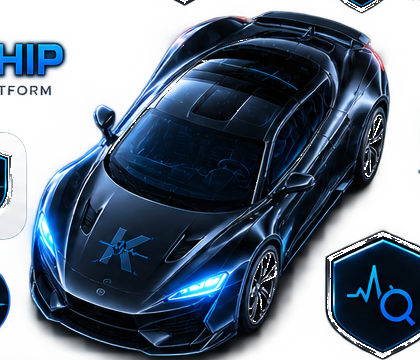
A 2010 Infiniti G37 at 100,797 miles, read end to end over a vLinker MS adapter. Not a simulation and not a demo file — the figures below are what the vehicle actually returned.
Protocol ISO 15765-4 CAN, 11-bit, 500 kbaud · responding module 7E8 · ELM327 v2.3 adapter identified and verified
Vehicle VIN read and decoded from the vehicle itself, matched against the garage profile
Findings P0300 random/multiple cylinder misfire and P0021 camshaft timing over-advance — each returned as stored, pending and permanent, which is the distinction that tells a technician whether a repair actually held
KryLocke-vHIP is designed as a vehicle-health record: current state, historical baseline, diagnostic evidence, trends, and AI-assisted interpretation in one place.
01Read standardized parameters, fault codes, freeze-frame data and readiness monitors across the modules that answer—without burying the driver in raw codes.
 02
02Normalize signals into health domains, compare them to thresholds, and look for relationships across multiple measurements rather than one code at a time.
 03
03Every finished session is filed against its vehicle automatically and compared with the one before it, so a code that came back reads differently from a code that never left.
 04
04Give AI structured evidence—not uncontrolled access to the car—so probable causes, confidence and next tests stay grounded in what was measured.
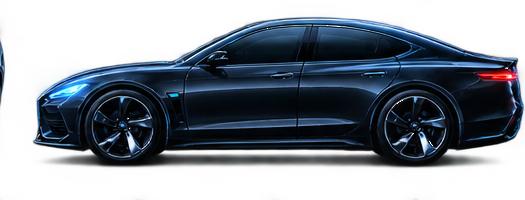
ICE and electric vehicles do not expose the same data. KryLocke-vHIP uses the vehicle profile to activate only the health domains that matter, and grades every value by how it was established.
Current measurements are stable. Two trends are being watched against this vehicle's historical baseline.
A buyer at a salvage or dealer auction has a few minutes, bad light and no signal. KryLocke-vHIP turns that into a structured record: the facts, a guided photo set, five scores, the notices worth acting on, and the most you can pay and still make money.
It is the only dimension that falls when something has not been checked. Without it, a scorecard built on three facts and nine blanks looks exactly like one built on twelve—same five numbers, same clean average, no hint that most of it was inference. Printed beside the others, the thinness of an assessment is visible at the same glance as its conclusion.
Every score is tappable down to the individual facts that moved it. A number nobody can account for is not a score; it is a hunch with a digit attached.
Type it or photograph the plate. The VIN sits at the top of both the lot sheet and the walkaround, read on device from the plate's barcode or its printed characters, and checked against its own check digit. Nothing is accepted until you confirm it against the plate — a misread VIN does not announce itself, it quietly becomes a different car.
The same frames, in the same order, for every lot — so two cars can be compared and a missing shot means "nobody looked" instead of nothing at all. Guidance for each frame stays on screen while the camera is up.
Solved as resale, less your margin, less repairs, fees and transport — printed with its own arithmetic so it can be checked rather than trusted. When there is no resale basis it shows nothing rather than a guess: a ceiling computed from nothing is the most dangerous number a screen like this could print.
Title brands, flood and fire, deployed airbags, suspected structure, high-voltage packs, missing keys, uncertified odometers. Every notice above a passing note carries the one thing to go verify, and links the free official lookups — NHTSA recalls, NICB VINCheck, NMVTIS — all of which need the VIN the app just captured.
With a connection, an AI pass estimates retail and wholesale ranges, comparable salvage money and where the repair cost actually goes. Those figures arrive stamped as estimates, and they cost confidence — because nobody has verified them against a sale.
The diagnostic core interprets known values first. AI then ranks probable causes, cites supporting evidence, identifies contradictions, and recommends the next read-only tests.
Bring your own key — OpenAI, Anthropic or Google — held in the device Keychain and never in the app's source. KryLocke asks each provider what models the key can actually reach and prefers the small, fast one, because this is schema-constrained reading of structured evidence, not an essay competition. When a heavier model is worth the money, Second opinion runs the larger one alongside and shows where the two disagree. Two readings are never silently merged into one confident answer.
01Finding Low-voltage instability detected during three recent sessions.
02Evidence Module voltage dropped from 13.8V to 11.7V during start sequence.
03Correlation Communication DTCs appeared in four modules during the same voltage event.
04Assessment Battery or DC-DC supply issue is more likely than four independent module failures.
05Next test Record 12V minimum voltage during start and verify charging output under load.
A diagnostic that stops at a phone screen has not finished. KryLocke-vHIP produces the artefacts a service department already works from, and connects to DriveBridge DealerOS so an assessment reaches the desks that act on it.
Stock-in: identity, VIN, odometer, lot and acquisition facts, with the photo set attached.
Recon worksheet: the damage, the notices worth acting on, and the repair estimate as recommended lines.
Brand, issuing state, odometer certification, and the paperwork that has to clear before retail.
Pricing and disclosure: the valuation with its basis, the branded-title disclosure, and the walkaround.
The repair-order block is written in the department's own three C's — concern, cause, correction — with every correction marked recommended and always in technician wording, because a repair order is a technician document. CSV and JSON exports carry the same content for importers, and the provenance line rides on every row: a spreadsheet gets filtered and re-sorted, and no row of this export should ever be read without the limits it was produced under.
CDK, Reynolds, Tekion and Cox all gate write access behind certified partner programmes. KryLocke records which system a shop runs and shapes its export accordingly — it does not claim a live link to any of them. DriveBridge DealerOS is different: both ends are ours, so that one is a real two-way connection, and the app ships ready for it with the server side still being built.
The adapter reads the vehicle, read-only, on the lot or in the bay.
KryLocke-vHIP builds the health picture, scores and labelled estimates on the device.
The assessment is packaged for DriveBridge DealerOS with its provenance attached.
DriveBridge places each piece in the right lane: Intake, Service, Title or Sales.
Status flows back, so the app shows what the desk has acted on. Two-way, because both ends are ours.
The app ships ready for this connection; DriveBridge's server side is still being built. Until it is live, the same content leaves as CSV and JSON exports.
One read feeds stock-in, the recon worksheet, title and pricing. Fewer hand-keyed VINs, fewer transcription errors.
Service sees stored, pending and permanent codes with recommended lines before the car reaches the bay.
Repair-order blocks arrive in concern, cause, correction, written in technician wording.
Sales gets the valuation with its basis and branded-title facts, so disclosures match the evidence.
Every row carries its provenance, so managers can see what was measured and what was estimated.
Read-only by design. Nothing is written to the vehicle, and nothing goes into a DMS uninvited.
The first iOS release connects through the vLinker MS. The architecture remains interface-neutral so future BLE, Wi-Fi, replay, CAN-FD and J2534 bridge support can be added without rebuilding the app.
A later desktop/network bridge can connect professional SAE J2534 pass-through hardware to KryLocke-vHIP while preserving the same iOS application architecture.
Every one of these is a decision, not a gap waiting to be filled.
Checkpoints are only marked proven once a real vehicle has returned the data.
Discover and reliably connect to vLinker MS.
Proven on vehicleInitialize adapter and validate commands.
Proven on vehicleDetect protocol and retrieve VIN.
Proven on vehicleDecode standardized SAE parameters.
Proven on vehicleRead and interpret diagnostic trouble codes.
Proven on vehicleSessions filed per vehicle and compared with the one before.
BuiltReconstruct multi-frame messages reliably.
BuiltExplain structured evidence without controlling the vehicle.
BuiltRead-only address sweep to find the modules a platform actually answers on.
In progressFuel-trim correlation, freeze frame and Mode 06 inside the engine and transmission views.
In progress
Reading live vehicles today, assessing auction lots offline, and built to grow into a living health record for modern vehicles.